Postdoctoral Researcher
Argonne National Laboratory
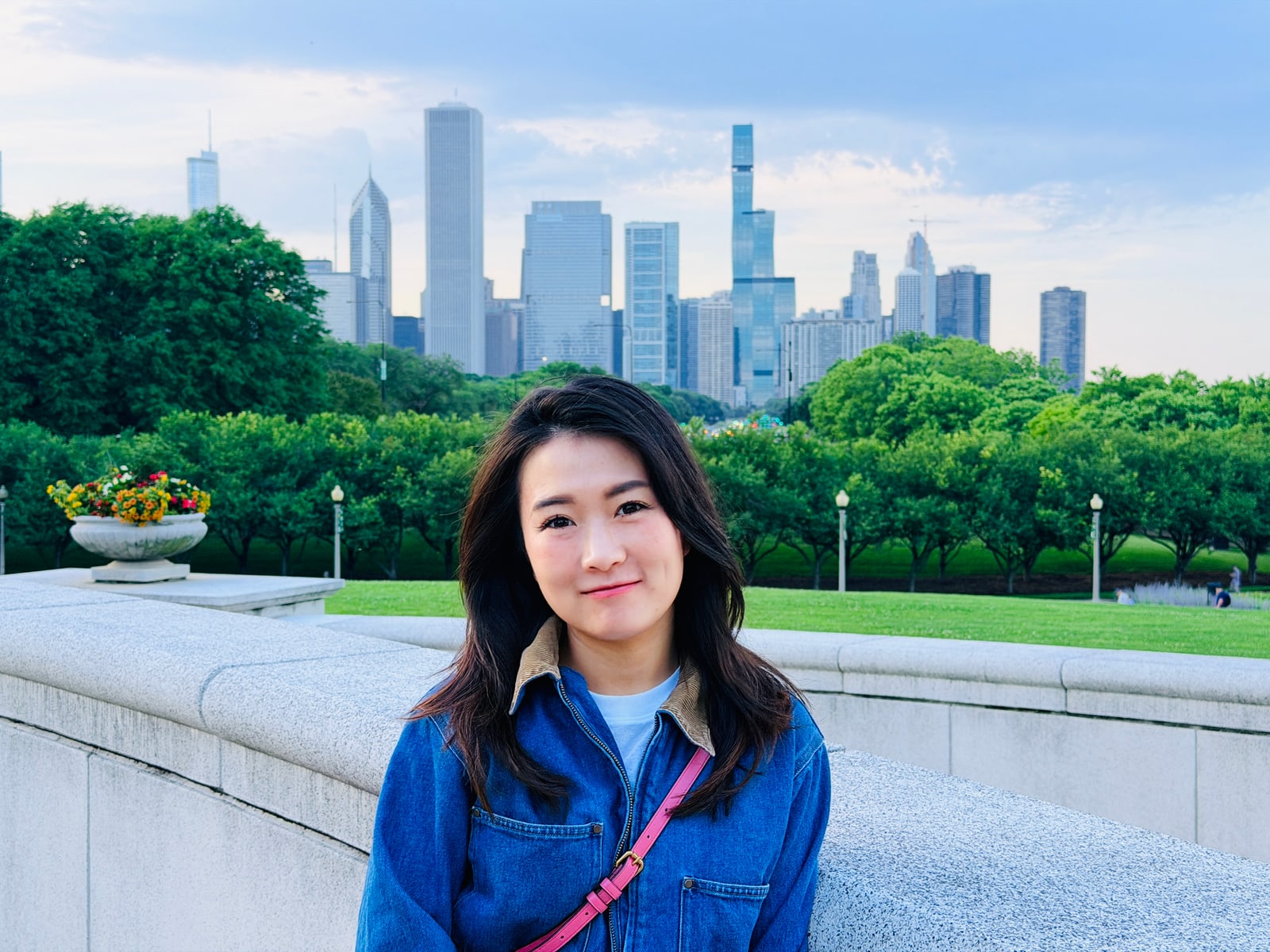
Postdoctoral Researcher at Argonne National Laboratory
Multi-Agent Systems · AI for Science · Materials Discovery
I am Chih-Hsuan (Bella) Yang, also known as Bella Yang, a Postdoctoral Researcher at Argonne National Laboratory.
I study how AI agents can collaborate reliably: when agents should communicate, whose feedback should be trusted, and how collaborative trajectories can become learning signals.
My work connects system-level evaluation with the details of agent interaction. I examine when collaboration is worth its cost, whether reviewers and solvers actually make use of one another's feedback, and which messages or agents contribute to successful reasoning.
A central part of this research is AgentsSci, an open research program for measuring multi-agent scientific reasoning across protocol choice, critique uptake, trajectory value, and credit assignment.
My earlier work focused on AI for materials and molecular discovery. I developed generative and multi-fidelity learning methods for molecules, organic electronics, and microstructure design, and co-led BioTrove, a large-scale biodiversity dataset and multimodal AI project. Industry research at Google X and Corteva Agriscience connected these interests to multi-agent and multimodal systems and preference-based language-model post-training.
Argonne National Laboratory
Corteva Agriscience
X, Google LLC (Google X)
Ph.D. in Mechanical Engineering, co-major in Computer Engineering, minor in Applied Mathematics; M.S. in Computer Science — Iowa State University.
Mentoring & collaboration
In addition to hands-on research, I mentor students working on collaborative AI and AI for Science. I welcome conversations with researchers and students interested in multi-agent systems, scientific foundation models, and AI-enabled discovery.
Start a conversation →Evaluate when multi-agent interaction helps, identify which messages and agents contribute, and turn trajectories into learning signals.
Develop generative, preference-based, and multi-fidelity learning methods for molecular and materials design.
Build multimodal foundation models, scientific datasets, and physics-informed learning methods for real scientific workflows.
Released three companion studies on protocol routing, critique uptake, and trajectory value in multi-agent reasoning.
Published MolGen-Transformer, a molecular language model for generation and latent-space exploration of organic molecules.
Completed a Ph.D. in Mechanical Engineering, co-major in Computer Engineering, with a minor in Applied Mathematics at Iowa State University.
BioTrove was presented as a NeurIPS Datasets and Benchmarks Spotlight.